Entertained Into Cowardice
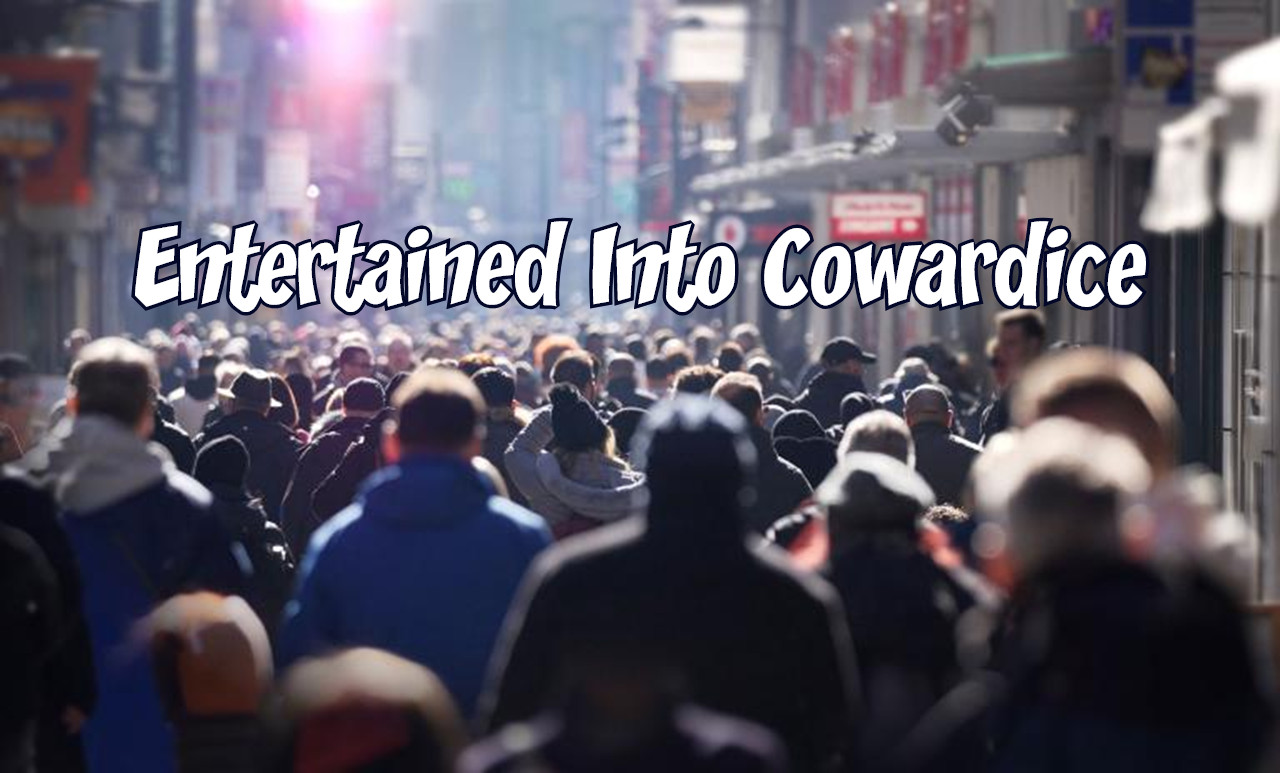
If we are honest with ourselves, we have to admit that we feel this low, persistent anxiety
beneath our modern life. The sense that creativity and authenticity are replaced by imitation,
automation, and algorithms.
We believe we are free. We are not. Freedom does not feel like this. It feels like standing
alone at the edge of existence with no one to blame, no one to follow—and that is exactly what
our society is against. We live in a world that praises freedom constantly yet quietly punishes
anyone who actually embodies it.
We fear responsibility—the moment when our excuses collapse and we realize that no god, no
system, no partner, no authority is holding us back but only our own refusal to become
conscious, disciplined, and self-directed.
The terrifying truth is that chains are no longer forced upon us. They are chosen. Chosen in the
form of comfort, distraction, and the approval of our hedonistic gluttony. Freedom demands
strength, and strength demands responsibility. Anyone who refuses to conform is called arrogant;
anyone who refuses to submit is labeled toxic; anyone who defines their own values instead of
borrowing them is treated as a threat.
We crave certainty more than truth. We want rules handed down, paths already approved, lives
already lived. When those structures exist, obedience feels like virtue. Without the rules, we
are exposed. Without external authority to blame, there is no moral shelter, no script—only our
own choice. And the choice reveals our cheap character.
The Slave Morality of Modern Society
Our slave morality is born from smallness and hatefulness. When we lack the energy to make our
lives worth living, we seek energy from a society that redefines virtue in favor of limitations.
Strength becomes cruelty, discipline becomes oppression, ambition becomes immorality. Weakness,
hesitation, and conformity are taken as kindness and humility. So failure becomes sacred and
excellence becomes suspicious, exactly as Nietzsche warned.
We are not oppressed during life; we are endlessly entertained, until old age. In the process of
getting older, we become more and more cowardly. We avoid pain and risk. We value comfort above
all else and call that wisdom. We say everyone is equal, not out of truthfulness, but out of
fear of being different. We seek pleasure, not fulfillment; security, not greatness. We glorify
the cross, not resurrection, and we laugh at anyone who reaches for higher, calling them foolish
or even dangerous.
We believe we are free because no one commands us, but in reality we are governed by appetite,
distraction, and approval. We cannot endure silence. We cannot endure solitude. We cannot endure
the slow, painful work of becoming something more than we already are.
So society offers safety through sameness and smallness, so no one has to feel inadequate. If
everyone obeys, anyone can lead. The world is not run by the smartest people. Politicians are
not the kindest, the most talented, or the most hardworking representatives in society. The
people at the top possess a special greed and thirst for power.
We are sleepwalking through life, reacting to emotions we don't understand; we are easily
manipulated by sweet-tongued politicians and corporate officials. We have spent our lives trying
to be good, trying to be transparent, trying to be understood. And what has it gotten us?
Betrayal, exhaustion, the feeling of being overlooked while those with less talent rise above
us.
We talk to fill the void. We are terrified of silence because in silence we have to face
ourselves. So we babble, we explain, we overshare, we hand over the blueprint of our mind to
anyone who will listen. And in doing so, we become predictable. And if we are predictable, we
are easily fooled.
The social programming made us cold, distant, heartless. We live in a world of extreme
narcissism. Everyone is obsessed with their own reflection. We are starring in our own movie and
everyone else is just an extra. The mistake we make is trying to be the star in someone else's
movie. We try to impress people, trying to show them how smart we are.
To hell with that, Machiavelli would say. Instead, we have to learn to reflect other people's
emotions back to them. If they are angry, we need to validate their anger. If they are excited,
we need to match their energy, use their words, adopt their posture. When we mirror someone, a
powerful psychological transfer happens. They do not see us; they see themselves. And because
they love themselves, they will love us. They will think we are the most intelligent, charming,
and empathetic person they have ever met, even if we have said almost nothing.
The root of our existential anxiety in modern society is attachment to the outcome. You want the
job, the relationship, the respect. And because you want it so badly, you are desperate and you
emanate scarcity. And scarcity is repulsive. People run from those who need them. They are drawn
to those who can live without them.
We must cultivate a state of radical outcome independence. This is the mindset that says: I will
work for this. I will plan for this. But if I do not get it, I will be fine. This is not giving
up. This is the ultimate power move. When you are willing to walk away from the negotiation
table, you hold the cards. When you are willing to lose the relationship, you set the standards.
Fear of loss makes us slaves of this greedy, sick civilization. If your boss knows you are
terrified of losing your job, he owns you. If your partner knows you are terrified of being
alone, they own you. You must mentally accept the worst-case scenario. Visualize losing it all
and make peace with it; realize you would survive. Once you destroy the fear of loss, you become
dangerous. You become untouchable. You can speak the truth because you don't fear the
consequences.
The Fear of Conflict
We want a life of peace. We want everyone to like us. We avoid conflict at all costs. This is an
artificial installation of our upbringing, a simple biological error. Conflict is the fight of
intelligence, and without resistance, our mind atrophies.
The naive mind projects its own goodness onto the world. You think, I wouldn't lie to him, so he
won't lie to me. This projection is the cause of your greatest heartbreaks. A brutal truth of
human psychology is that everyone acts in their own self-interest. Even acts of altruism are
often driven by the need to feel good about oneself. This is not a reason to be bitter. It is a
reason to be awake.
You must develop a background radiation of suspicion—not paranoia, which is fear without
evidence. Suspicion is attention to detail. Watch what people do, not what they say. Words are
cheap; they are designed to manipulate. Actions are the only truth. Require proof. Test loyalty
before you lean on it. Give people small amounts of power and see how they use it before you
give them the kingdom.
Society tells you to be harmless, to be nice, to repress your anger, your wishes, and desires.
But a harmless man is not a virtuous man. A harmless man is just a weak man. He cannot do good
because he does not have the capacity to stop evil.
From this moment on, walk into a room and see things differently. See the silence that screams.
See the mirrors people hold up. See the lions and the foxes. You are no longer a passive servant
of society in the war of the mind; you are an active warrior.
Do not fear isolation. When you wake up, you realize how many people are still sleeping. You
will feel a distance grow between you and your old life. Your old friends may think you have
changed. They may say you are colder, quieter. Let them. You are shedding the skin of the
victim. You are shedding the need for validation. You are stepping into the realm of the
outsider.
Softness, Decay, and the Inversion of Values
Weakness does not make you virtuous. It makes you visible prey. Modern systems reward passivity
with temporary comfort, but they offer no protection when chaos arrives. A person without inner
authority looks outward for rescue. They trust institutions to define their values, media to
tell them what to think, trends to tell them who to be. They mistake consensus for truth and
popularity for morality. And when those systems fail, as they always do, they collapse into
hate.
Societies decay not when they become cruel, but when they become soft. When excellence is
discouraged to protect fragile egos, when discipline is taken as a stubborn refusal of the norm,
when hierarchy is denied rather than earned. In today's woke society, the strong are taught to
apologize for their strength while the weak are taught to exhibit their stagnation. This
inversion breeds quiet hostility—not against injustice, but against modernity itself.
New Age spirituality deepens this problem rather than solving it. It promises transformation
without sacrifice, confidence without competence, power without pain. Growth that does not
demand confrontation with weakness is not growth. It is decoration. You become strong not by
affirming yourself endlessly but by subjecting yourself to trials that expose your limits and
force adaptation.
True freedom in the modern world begins with withdrawal and even physical isolation—the
psychological separation from the herd. It requires the courage to be misunderstood. It requires
silence where distraction once lived. It requires boredom, friction, and deliberate hardship.
These are the conditions under which the soul emerges.
Most avoid this because it feels like regression. It feels lonely, like losing ground. But this
descent is necessary. Before you can build yourself, you must dismantle borrowed identities. You
must do this without applause. You must learn to act without validation. This is where most turn
back—not because they cannot endure pain, but because they cannot endure invisibility.
Social media has amplified this fear. Identity is now showcase; values are displayed, not lived.
People shape their beliefs around what will be rewarded with attention. Outrage replaces
thought. Conformity replaces courage. Many choose careers they can tolerate rather than paths
that demand transformation. They bet on security, approving their stagnation. They have mistaken
survival for living.
Fear of judgment keeps people small. Fear of failure keeps them cautious. Fear of success keeps
them dependent. All three are masks for the same terror—the terror of discovering what you are
capable of when excuses are removed. The terror of becoming responsible for your own existence.